
🩳 Diffidence
A short story

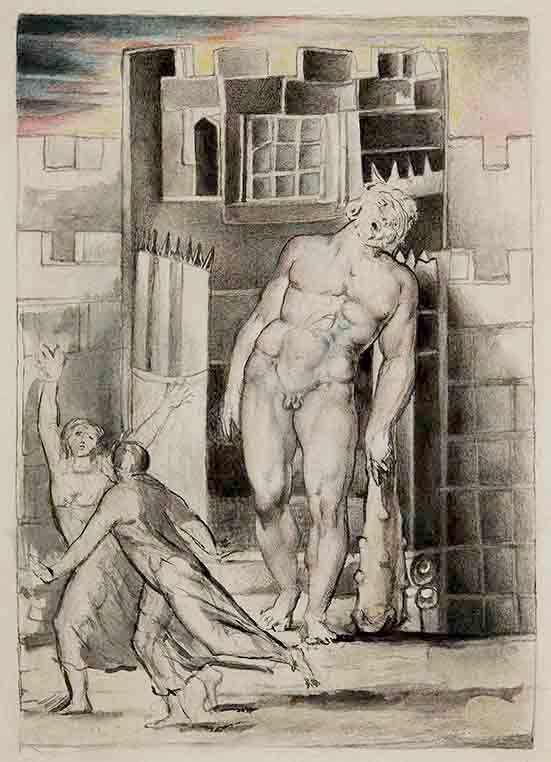
This is, to my great shame, a Pilgrim’s Progress fan fiction. I got to thinking about Giant Despair crouched in the dungeon of his Doubting Castle. More specifically, I got to thinking about his wife—the Giantess Diffidence.
Diffidence.
That’s an odd word. One whose meaning has completely flipped over the last 600 years:
Diffidence, definition c. 1400: “Distrust or doubt of the ability or disposition of others.”
Diffidence, definition c. 2025: “Modesty or shyness resulting from a lack of self-confidence in one’s self.”
The story below helped me imagine what would happen if Diffidence herself lived through that shift. Do abstract word-beings from didactic moral tales feel the difference?
I think so.
I’ll say no more because my next post is a big ol’ personal essay about Bunyan, fundamentalism, and childhood.
Thanks for reading!
Diffidence or The Inner Turmoil of a Storied Giantess
A short story
“Now, Giant Despair had a wife, and her name was Diffidence.”
— John Bunyan, Pilgrim’s Progress
They moved from Castle Doubt to Manor Atheist, then, for a time, a dingy hostel while the little people were finishing Borough Ambivalence. Each move was a downgrade for Giants Despair and Diffidence. But they were used to it, expected it even: “noble family falls into decay” tale as old as time and tall as they were.
Giant Despair liked to think things hadn’t changed. But sometimes, he doubted.
For Diffidence a thousand odd seasons of stirring porridge, rubbing bunyans, and darning socks did a number. No longer was she a Goodwife. Come to think of it, never had been. People just changed the rules of what that meant, and she, like a stubborn magnet, or a mirror, or a planet orbiting opposite another celestial body had both changed with the times and hadn’t changed a bit.
She rankled every time she had to crawl into Despair’s filthy ruffled bed– the sheets like tainted snow. And he said horrid stuff in his sleep, the sounds crawling from his mouth one upon the other in a slur, like a coiled asp.
“Things haven’t changed one bit,” she liked to say, to the mirror, to the walls, to her great, looming shadow, “They’ve changed dozens and dozens of bits. Heaping buckets of bits. Dragon-treasure-hoard-piles of bits.”
Everywhere she looked Diffidence saw difference. Gone were the goblets of morose, mulled wine, here to stay were the crumpled can towers of Pabst and Miller, the empty packs of Camels, the ashtrays full unto bursting, the yellow burger wrappers with red ketchup stains crusting brown like old wounds. The unwashed underwear.
And the captives, well…
She could hardly bear to think of them.
Time was, she’d smirk indifference to their fate: “cook em’, eat em, or set em free. Do as you will, matters not to me!” And faithless, then, rather than feeble, she meant every word of abuse.
But Time, with his old watch, turned things strange.
The captives came more morose these days, their despair more uncomfortably close to her own. Weepy sods in thrift-store clothes. New mothers staring blankly at the cinderblock walls. That boy with the pockmarked face who kept scratching a pebble on his thigh.
“I’ll get better, I swear,” mumbles Despair, gnawing on the old bone of the words.
And she doubts this, because that’s what she does.
But she doesn’t leave.
Because she’s Diffident– a pebble stuck in mortar, trapped in the grit of yesterday, and yesterday’s yesterday on back to the beginning. Faithless, she thinks. That’s what I was. Tough as an old scar. Tight-knit as a lock without a key. Unbridled and resistant to rods, solemn words, tight-clenched fists on wrists…
Resistant even, to Time.
When Despair wakes, the cold shackle has grown warm on his ankle.
And he feels, for the first time since the castle, that he’s come home.